
The Art of Precision: The Masterclass of Lab Grown Diamond Planning and Cutting
In the world of fine jewelry, a diamond’s journey from a raw, unformed crystal to a breathtaking centerpiece is a marvel of both advanced technology and ancestral craftsmanship. While the origin of a lab-grown diamond begins in a high-tech laboratory mimicking the intense heat and pressure of the earth its ultimate beauty is determined by the human hand and the mathematical precision of the lab grown diamond Planning and Cutting phase.
At Aurion Lab Diamonds, we believe that a diamond’s value goes beyond its carat weight; instead, its value lives in the soul of its cut. Specifically, this in-depth look explores how we transform raw carbon into the world’s most brilliant gemstones through rigorous lab grown diamond Planning and Cutting.
Part I: The Philosophy of the Cut
Before diving into the technicalities, it is essential to understand why cutting is the most critical of the 4Cs (Cut, Color, Clarity, and Carat). While nature or the laboratory dictates the color and clarity, man determines the quality of the lab grown diamond.
In fact, a poorly cut diamond will appear dull even if it has perfect clarity. Conversely, a masterfully planned and cut diamond can mask slight inclusions and maximize light return. In lab-grown diamonds, where we start with high-quality rough material, the lab grown diamond Planning and Cutting stages are where we define the diamond’s “personality.”
Part II: Step 1 – Advanced 3D Scanning and Mapping
The process begins the moment technicians harvest a raw diamond “rough” from the CVD or HPHT chamber. Consequently, this stage requires a unique approach to lab grown diamond Planning and Cutting.
1. Initial Assessment
Unlike mined diamonds, which often grow in octahedral shapes, lab-grown rough (especially CVD) often grows in “blocks” or “plates.” Therefore, Our gemologists first inspect the rough for growth lines or microscopic inclusions.
2. Laser Tomography and Sarine Mapping
We utilize state-of-the-art Sarine Technologies scanning systems to facilitate perfect lab grown diamond Planning and Cutting. Specifically, we place the rough diamond in a vacuum chamber where a high-definition laser scans every nanometer of its surface.
- Inclusion Mapping: The software identifies the exact location of any internal “clouds.”
- The Goal: To find the path where we can cut the largest possible diamond with the highest clarity.
Part III: Step 2 – The Strategic Planning Phase
Once the 3D model enters our computers, our master planners begin a high-stakes game of “Gemstone Tetris.” Indeed, this is the most crucial decision-making phase in lab grown diamond Planning and Cutting.
1. Maximizing Yield vs. Maximizing Beauty
A diamond planner faces a constant tug-of-war. They can either cut one large diamond with a lower “Cut Grade” or cut a slightly smaller stone that achieves a “Triple Excellent” rating. At our boutique However, we always prioritize Light Performance over Carat Weight in our lab grown diamond Planning and Cutting protocols.
2. Virtual Prototyping
Using CAD software, the planner “places” virtual diamonds inside the rough. As a result, they can see exactly how light will travel through the stone before a single grain of diamond dust sheds.
Part IV: Step 3 – Cleaving and Lasering
In the past, craftsmen split diamonds using a steel blade and a mallet. Today, modern lab grown diamond Planning and Cutting utilizes Green Laser Technology.
Specifically, the laser cuts through the hardest material on Earth with a margin of error of less than 0.02mm. After the laser divides the rough, the diamond undergoes “bruting,” where two diamonds spin against each other to create the “girdle.”
Part V: Step 4 – The Art of Faceting
This is where technology meets human artistry. Faceting is the most labor-intensive part of Planning and Cutting. A standard Round Brilliant diamond has 57 or 58 facets, each placed at precise angles.
- Blocking: The “Cross-worker” lays the foundation by polishing the first 17 or 18 facets.
- Brillianteering: The “Brillianteer” adds the remaining facets, giving the stone its “fire” and “scintillation.”
Part VI: The Physics of Light
When we execute lab grown diamond Planning and Cutting, we are essentially building a complex system of mirrors. Our cutters focus on three optical phenomena:
- Reflection (Brilliance): White light reflected back to the eye.
- Refraction (Fire): White light breaking into a rainbow of colors.
- Contrast: The pattern of light and dark areas that creates a crisp, rhythmic sparkle.
Part VII: Quality Control and “Hearts & Arrows”
Not all cuts are created equal. In our lab grown diamond , many stones are cut to Hearts & Arrows specifications a level of symmetry that only the top 1% of diamonds achieve.
This level of precision ensures that light is reflected almost 100% perfectly, creating a “hall of mirrors” effect that makes the diamond appear incredibly bright.
Part VIII: The Sustainability of Lab-Grown Cutting
The ethical traceability of Planning and Cutting is a significant advantage. Our diamonds are cut in modern, regulated facilities where we ensure every artisan is provided with a safe environment, fair wages, and health benefits. Furthermore, the diamond dust generated during lab grown diamond is collected and recycled for industrial use.
Part IX: The Importance of Certification (IGI and GIA)
Once the Planning and Cutting is complete, the diamond is submitted to the International Gemological Institute (IGI) or the Gemological Institute of America (GIA). These labs verify the Cut Grade, evaluating:
- Polish: Facet smoothness.
- Symmetry: Facet alignment.
- Proportions: The angles of the table, crown, and pavilion.
An “Ideal” grade on a report is a testament to the weeks of labor involved in lab grown diamond.
Part X: Choosing Your Cut – A Guide for the Buyer
How our lab grown diamond affects your wearing experience depends on the shape you choose:
- Round Brilliant: Mathematically perfected for maximum light return.
- Emerald Cut: Focuses on “step” facets for a “hall of mirrors” effect.
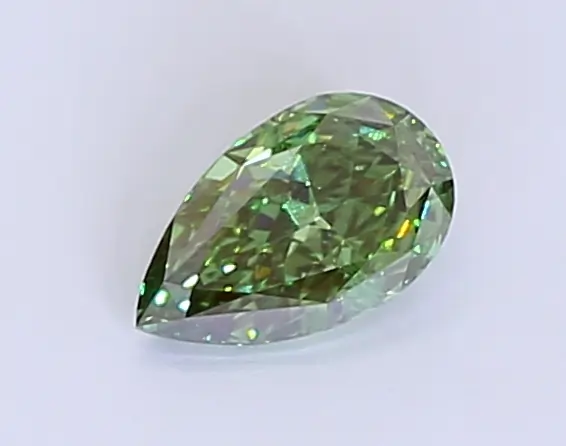
- Oval or Pear: Requires careful “bow-tie” management during the lab grown diamond Planning and Cutting phase.
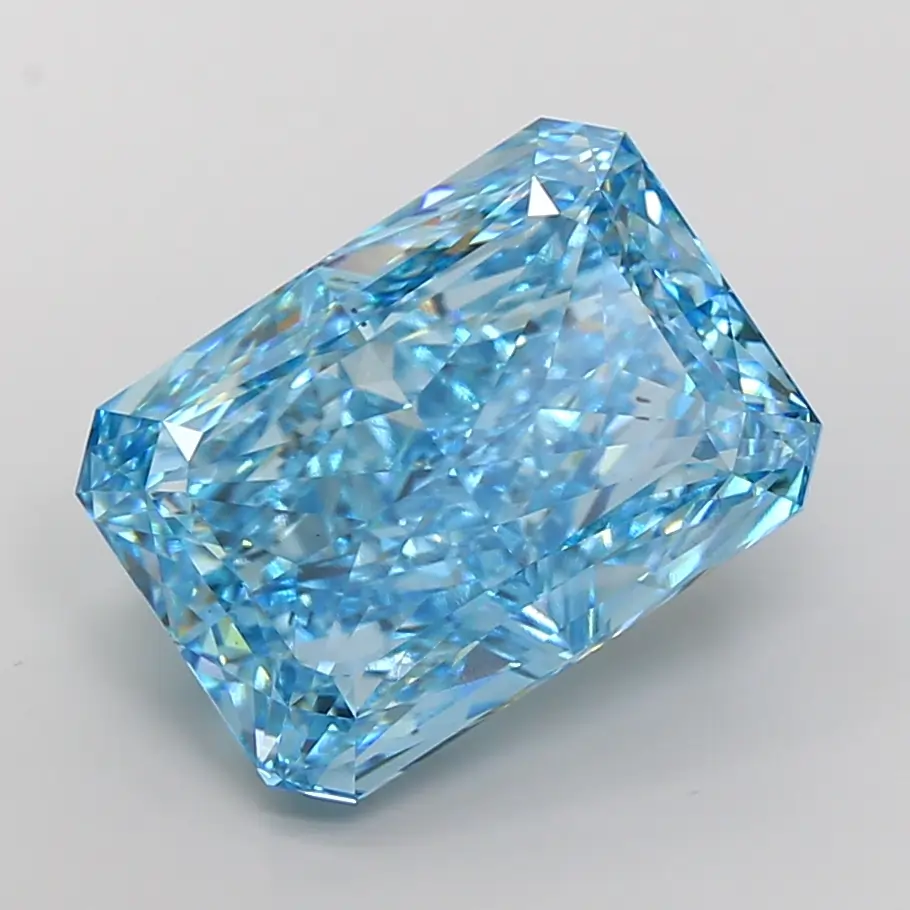
- Princess or Radiant: Planned to maximize a “crushed ice” look with thousands of sparkles.
Part XI: The Future of Precision – AI and Automation
We are now integrating Artificial Intelligence (AI) into our lab grown diamond Planning and Cutting phase. AI algorithms can analyze thousands of possible permutations in seconds. However, the final “polish” in lab grown diamond will always require the human eye to ensure the stone’s fire is brought to life.
Conclusion: A Masterpiece on Your Finger
A lab-grown diamond is a miracle of science, but it is the lab grown diamond Planning and Cutting that turns it into a piece of jewelry. When you look at your ring, you aren’t just looking at carbon; you are looking at hours of laser mapping and a legacy of geometric artistry.
We take pride in every facet. Because we know that while the lab creates the diamond, the lab grown diamond Planning and Cutting creates the dream.